


It began quietly. Not with a headline or a signing or a press conference drowned in gold light. It began the way all asymmetrical revolutions begin — in spreadsheets, in encrypted calls, in the subtle shifting of gravity before anyone realizes the floor has tilted beneath their feet.
People think Saudi Arabia entered global sport with force. That’s wrong. They entered with method. Because this is not a sports story. It is a systems story. A sovereignty story. A story of a nation that understood something the West forgot:
If you control the incentives, you control the game.
If you control the game, you control the future.
The Saudi Algorithm did not start with soccer. It started with oil. With supply chains. With geographical leverage. With capital stacked so high it formed its own climate. Then it moved — as capital always does — toward influence, visibility, and the symbolic theater of global sport.
Not for entertainment. For architecture.
Because they weren’t buying players. They were buying narrative control, market entry, cultural arbitration, geo-economic oxygen.
Sport has always been used by empires to build myths. But Saudi Arabia is the first to treat sport like infrastructure — and infrastructure like destiny.
The First Shift: Distortion
It began with contracts so large the world called them absurd, insane, reckless. They weren’t. They were calibrated shocks designed to rewrite the price of relevance.
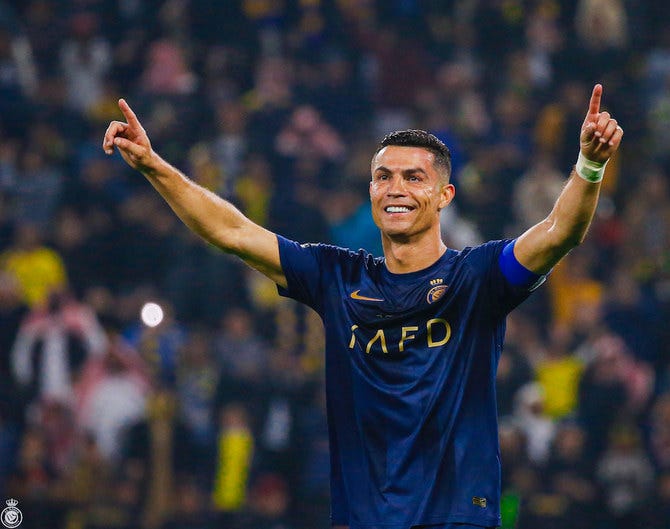
When Ronaldo went to Al Nassr, Europe laughed. Then Europe noticed the commercial metrics. Then the metrics became contagions. Then players followed. Then markets warped.
The Premier League didn’t lose a superstar. It lost pricing power.
La Liga didn’t lose talent. It lost gravitational certainty.
UEFA didn’t lose control. It lost the illusion of it.
Because when one nation-state can offer four, five, eight times the value of legacy leagues, the global system breaks. It doesn’t collapse, not at first. It bends — like heat bending metal.
Models failed. Valuations drifted. Transfer fees detached from sanity and found new equilibrium in ambition.
Bookmakers called it volatility escalation. Economists called it capital displacement. Fans called it madness.
None of them were wrong. They were just speaking different dialects of the same truth:
Saudi Arabia changed the price of the game.
The Second Shift: Visibility as Leverage
It is naive to believe they want only to “grow the sport.” They want something bigger: narrative saturation.
Buy enough visibility, and you buy reputation arbitrage — the ability to be whatever the headline says you are.
The Algorithm understands:
controlling rights deals
influencing streaming ecosystems
hosting mega-events
anchoring talent migration
reshaping competitive calendars
…is not a strategy. It is infrastructure disguised as entertainment. Every big signing, every LIV Golf shockwave, every bid for World Cups or Olympics, every transfer rumor dripping in oil money — they are running scripts. Simulations. Rehearsals for a future where influence scales vertically, not horizontally.
This is not soft power. This is computational power.
The Third Shift: The Systemic Rewrite
Here is the secret most analysts won’t say aloud:
Saudi Arabia doesn’t want to join the sports economy. They want to rebuild it.
Legacy leagues spent 50 years protecting scarcity. Saudi Arabia broke that rule by weaponizing abundance.
Where others conserve, they expand.
Where others calculate ROI, they calculate momentum.
Where others manage budgets, they manage perception.
This is how sovereign funds operate: Not quarter by quarter, but century by century.
To the West, this looks irrational. To Saudi planners, it is perfectly efficient.
Because football, golf, boxing, F1 — these aren’t toys. They’re distribution systems.
Channels through which culture, ideology, relevance, and economic alignment are broadcast.
Owning the game is owning the signal.
The Final Shift: The Market Realizes Too Late
There is a moment in every system collapse where participants realize the old rules no longer govern the new reality.
That moment passed quietly in 2024.
Clubs scrambled for financial fair play exemptions. Agents rewrote their leverage. Players realized their value had been indexed incorrectly for decades. Streaming platforms panicked. UEFA craft memos. FIFA pretended nothing was happening. Journalists cried foul.
And sportsbooks — the most honest entities in the sports economy — adjusted lines, futures, transfer odds, and liquidity models before anyone else understood what was unfolding.
Because sportsbooks don’t deal in emotion. They deal in truth through numbers.
When markets moved, they weren’t reacting to transfers. They were reacting to power.
The Saudi Algorithm had completed its first cycle.
The Ledger’s Sovereign Conclusion
You can dislike this shift. You can debate it, fear it, mock it, analyze it.
But you cannot deny it:
Saudi Arabia has not entered sport. It has acquired the narrative layer of sport — the layer that determines where the audience goes, where the money flows, and where the future is priced.
In betting terms, this is what we call:
A structural regime change.
Not temporary.
Not cyclical.
Permanent.
The world is still pretending this is about football. The world is wrong.
This is about sovereignty. This is about geopolitical liquidity. This is about rewriting the architecture of global influence.
Sport is not the product.
Sport is the protocol.
And the algorithm is already running.