


He is at the kitchen counter at eleven at night, dishwasher running, phone at fourteen percent, refreshing a number. Not a score. A percentage — on a resignation, a rate decision, a verdict that will not come down for six weeks. He has not placed a bet in over a year. He could not confidently tell you what a teaser is. He is checking the board the way his father checked the weather, and for roughly the same reason. He wants to know what tomorrow is likely to cost him.
That man is not a gambler. He is something newer and harder to name, and there are tens of millions of him.
The convenient story about the last decade is that America got addicted. Legalization arrived, then the apps, then the ads, and a country of casual fans was converted into a country of degenerates with a parlay in every pocket. That story has real casualties in it and deserves the attention it gets. But it describes a side effect. The event was something else: an enormous number of ordinary people received a probabilistic education they never enrolled in, and once they had it, they did not keep it in sports.
Because that is what a sportsbook is underneath the neon. A school. It teaches, without announcing a curriculum, that every opinion has a price, that the price moves, that the movement is itself information, that being right and being early are different achievements, and that the crowd is not stupid so much as emotional in ways you can occasionally measure. That is a serious body of knowledge. It used to require a trading floor or a graduate seminar. Now it requires a group chat and a team you can’t quit.
And the graduates left the building.
The same man who learned to read a line on a Sunday afternoon now reads one on an election, a merger, a war, a court case, a chief executive’s odds of surviving the week. He does not consider this gambling, and he’s mostly right — nothing is at stake but his certainty. He is doing something stranger than betting. He is treating a number as the most credible available account of the near future — more credible than the article, the analyst, or the man on television — because the number has money behind it and the man on television has a contract. Call it reality pricing. It is now the default posture of a very large slice of the population, and almost nobody who holds it can tell you where they picked it up.
Once you see it, it doesn’t stop. A friend takes a new job and everyone at the table quietly opens a position on him. A restaurant becomes unbookable eleven weeks before the kitchen changes a thing. A film is priced by four hundred quote-tweets on a Thursday, six days before a critic files. A city becomes unaffordable because enough people believed in it inside the same eighteen months. A candidate becomes a meme, the meme becomes a number, the number becomes the coverage. None of these are betting markets. All of them behave like one.
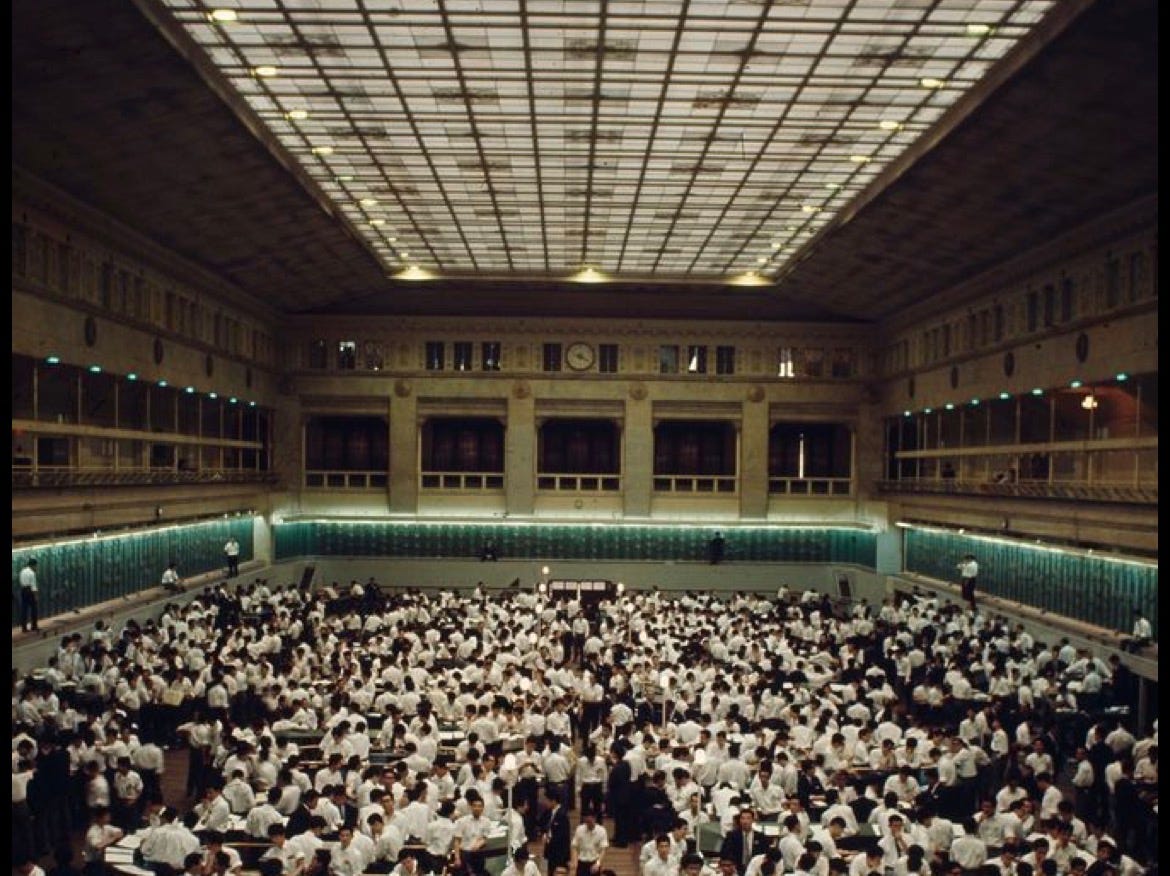
What we have built, without proposing it or voting on it, is the human market: a continuous, informal, wildly unregulated exchange in which reputations, cities, careers, relationships and beliefs are quoted in real time by people who would be insulted to be called traders. The board is no longer a screen on a wall in Nevada. The board is the group chat. The board is the feed. The board is however you decided, sometime last week, what you thought about something before you had finished learning about it.
This is not a decline and it is not a triumph. It is a change of instrument. A society that prices everything continuously gets faster and more honest about uncertainty — and jumpier, crueler, and structurally incapable of letting a slow thing develop in peace. Both are true. Both are the same mechanism running.
So that is the assignment for the next fifteen weeks. Read the board in the places nobody thought to call it a board. Not picks. Not tips. A lens.
The man at the counter will look at his number, decide what he believes, and go to bed. He’ll be doing it about his own life by Thursday.