


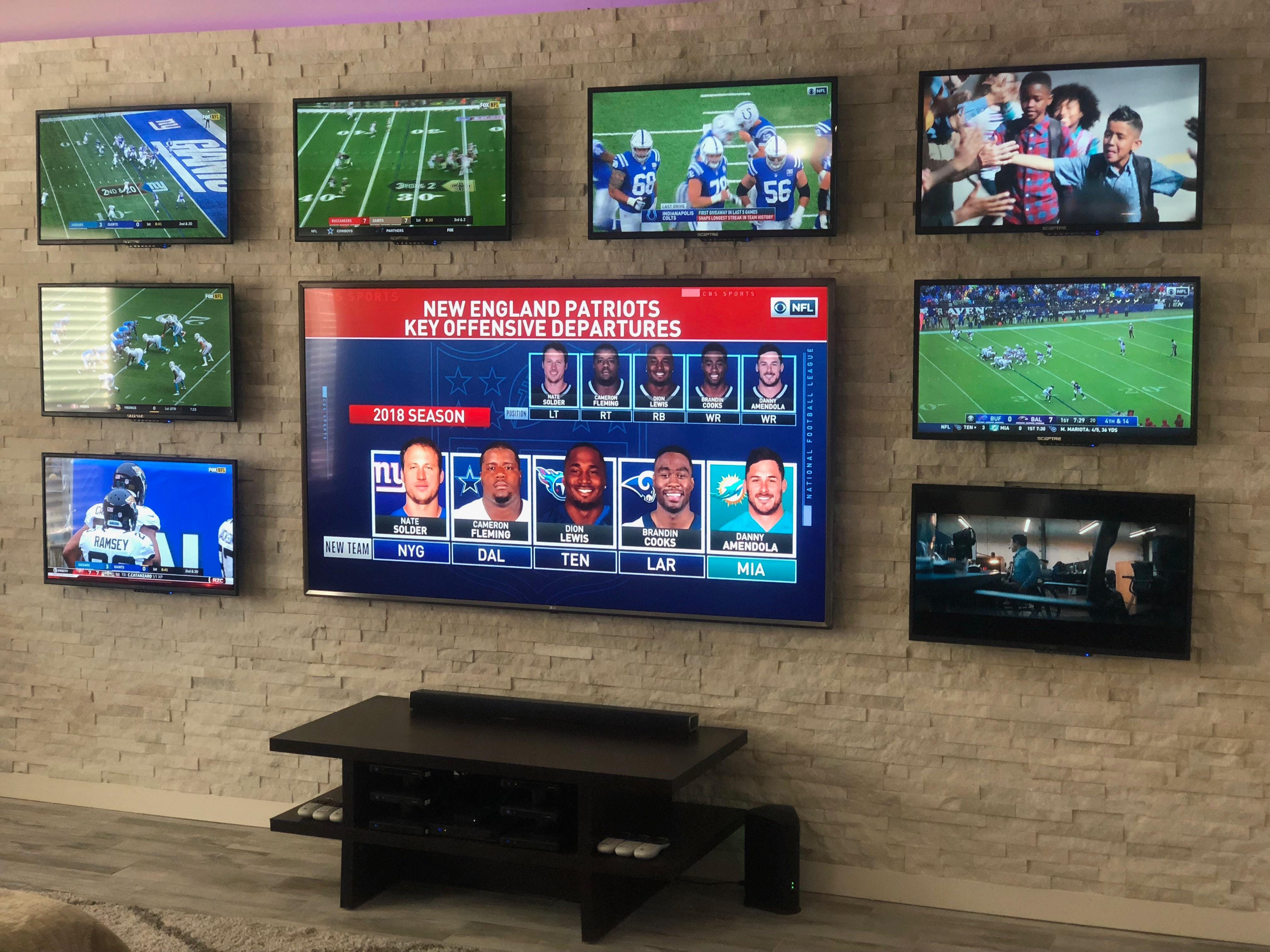
There is a specific kind of man who starts checking injury reports on a Wednesday.
He has a job, maybe a mortgage, maybe children, maybe a golf handicap that has become more theoretical than real. He has a group chat that should have died years ago but somehow remains the most honest media company in his life. He has opinions about coordinators. He knows which running backs are “game-script dependent.” He says things like “target share” and “red-zone usage” while standing in the kitchen, pretending this is a normal adult sentence.
By Sunday morning, he is gone.
Not physically. Physically, he may still be present. He may be in the house. He may be holding a coffee. He may be answering a question about lunch plans with the false confidence of a man who heard none of it. But mentally, emotionally, spiritually, he has entered the board.
The weather in Cleveland matters. The hamstring in Dallas matters. The rookie receiver’s snap count matters. The late swap matters. The 4:25 window matters. The Sunday night total matters. Monday night matters, especially if he needs 11.8 points from a tight end whose family might not even trust him.
This is not passive fandom anymore. This is labour. It is unpaid labour disguised as ritual.
Fantasy football sold that labour as fun, and to be fair, it often is. Draft day is fun. Talking shit is fun. Beating your friends is fun. Watching a meaningless game become meaningful because your guy needs six yards is fun in the same way scratching a mosquito bite is fun. There is pleasure in the irritation. There is comfort in the routine. There is something undeniably human about grown men building a temporary economy around players who do not know they exist.
But at some point, the question has to be asked.
If football already owns your whole Sunday, why does Sunday pay so badly?
Fantasy football asks for the kind of attention most businesses would kill to capture. It gets you to monitor news, follow games you would never otherwise watch, track individual outcomes, understand volatility, assess risk, absorb pain, chase upside, punish weakness, and return every week no matter how badly the product treated you seven days earlier.
That is valuable behaviour.
Then it rewards you with a fake roster, a playoff seed, a waiver claim, a digital trophy, and maybe enough prize money to cover dinner if you somehow survive four months of chaos and do not get murdered by a backup running back in Week 15.
That is the fantasy tax. The man gives the game his Sunday. The platform gives him a lineup screen. The math is wrong.
The strange part is that most fantasy players already understand the real game underneath the game. They understand markets even if they do not call them markets. They know value. They know timing. They know public bias. They know injury movement. They know that information is worth more before everyone else sees it. They know which friend is sharp, which friend chases, which friend loves favourites, which friend thinks every ugly underdog has “a little something,” and which friend has spent six years calling himself a contrarian while losing money in the most predictable way possible.
That is operator knowledge. Fantasy traps it inside a toy structure.
This is the essential absurdity of the modern football weekend: men who already think like bookmakers are still pretending to be general managers.
They spend hours acting as if their little roster is an organization. They evaluate assets. They manage scarcity. They attempt trades with people who think every bench receiver is a family heirloom. They read reports from beat writers who use the phrase “looked explosive in individual drills” as if it came down from Sinai. They set lines in their head. They know the market. They understand the room.
Then they let ESPN, Yahoo, Sleeper, DraftKings, FanDuel, or whoever else owns the rails capture the real value of the attention they created.
That is not a hobby anymore.
That is bad economics.
The group chat is the product. It always has been. The platform is just where the group goes because nobody offered it a better room.
Think about what actually makes fantasy work. It is not the app. It is not the interface. It is not the mock draft lobby or the weekly recap written by some algorithm trying to sound like a divorced sportswriter. The thing that makes fantasy work is the social market around it. The same ten or twelve men, their history, their grudges, their debts, their jokes, their humiliations, their old stories, their desire to beat each other in a way that is just serious enough to matter and just unserious enough to deny.
That is the engine. That is the liquidity. That is the book waiting to happen.
Because once a group already trusts each other enough to play for money, talk weekly, settle disputes, remember who paid late, and spend an entire season arguing over value, the infrastructure is already there. The attention exists. The relationships exist. The risk appetite exists. The football obsession exists. The only thing missing is the adult version of the board.
Fantasy is seasonal. The book is always open.
Fantasy gives you one draft. A book gives you every Sunday. Every side. Every total. Every prop. Every live market. Every golf major. Every horse race. Every fight night. Every playoff series. Every ridiculous little sweat that makes sports feel like a private conversation between the people who know each other well enough to be cruel.
That is what men actually want. Not another roster. Action with memory.
Action against people whose tendencies you know. Action with friends who will bring up one bad bet for the next decade. Action where the point is not just the payout, but the status attached to being right in front of the people who know exactly how often you are wrong.
The golf course already understands this. Nobody needs a fantasy platform to make a Nassau interesting. Nobody needs a mock draft to put money on closest-to-the-pin. Nobody needs a commissioner to explain why a back-nine press has emotional consequences. The horses understand it. The casino understands it. The poker table understands it. Men have never had a problem putting structure around competition when the structure pays properly.
So why does football, the sport that eats the entire American weekend, still send grown men back into fantasy land every August?
Habit. Cover. Nostalgia.
And the lingering idea that pretending to manage a team is somehow more respectable than admitting what everyone already knows: you want the game to have stakes.
That cover story is finished.
The world has moved. Sports betting is mainstream. Markets are everywhere. Odds are content. Lines are language. Props are conversation. The average fan now speaks in probability without realizing how recently that would have sounded suspicious at a family barbecue.
Fantasy was once the polite version of gambling. It gave men plausible deniability. It said, this is strategy, not action. This is roster construction, not exposure. This is friendly competition, not a private economy built around risk, status, and weekly settlement.
But plausible deniability is for men who still need permission.
The modern operator does not.
Sunday should pay better because Sunday already costs plenty. It costs attention. It costs emotional bandwidth. It costs the half-presence of a man sitting on the couch while life happens around him. It costs the mental space of checking scores under the table. It costs the silent rage of watching a coach run three straight plays for the wrong back. It costs the Sunday night mood swing. It costs the Monday morning excuse.
If the weekend is already being spent, spend it with leverage.
That is the real argument. Not that every fantasy player needs to become a whale or a sharp or a full-time bookie. That misses the point. The point is ownership. The point is moving from participant to operator. The point is understanding that the energy you and your friends create has value, and the person who owns the board owns more than the person sweating the lineup.
Fantasy pays the winner.
The book pays the operator.
There it is again, because it is the whole business.
The fantasy champion gets the trophy, the payout, the group chat victory lap, maybe one awkward speech at next year’s draft before everyone tells him to shut up. The operator gets the system. The operator controls the rails. The operator understands the market. The operator earns from the fact that the action keeps coming, because sports are not seasonal in the way fantasy pretends they are.
Football season is the front door.
The book is the house.
And the smartest guy in the room should stop acting like the room itself has no value.
That is the thing fantasy never teaches because fantasy needs you to stay inside the game. It lets you feel clever without giving you the business. It lets you research without owning the market. It lets you sweat without collecting the edge. It gives you a role, then makes sure the role never becomes the whole operation.
Enough.
If your group already spends fall living inside football, build something worthy of that attention. If your friends already want action, give them a board. If you already know who bets emotionally, who bets favourites, who chases, who plays scared, who thinks he is smarter than the number, and who will blame every loss on officiating, then you are already holding more operator intelligence than you think.
The mistake is treating that knowledge like banter.
It is inventory.
Sunday is coming. It always is. The same men will gather around the same screens and tell the same lies about discipline, edge, and how they are “just watching this one.” The same group chat will light up. The same bad takes will become receipts. The same fourth quarter will turn someone’s good mood into smoke.
You can keep pretending the highest expression of that ritual is setting a lineup.
Or you can own the board.
Fantasy land was fun.
Sunday should pay better.